Geodesic™
A delay that falls into a gravity well, and holds at the horizon.
α(r) = √(1 − rs / r)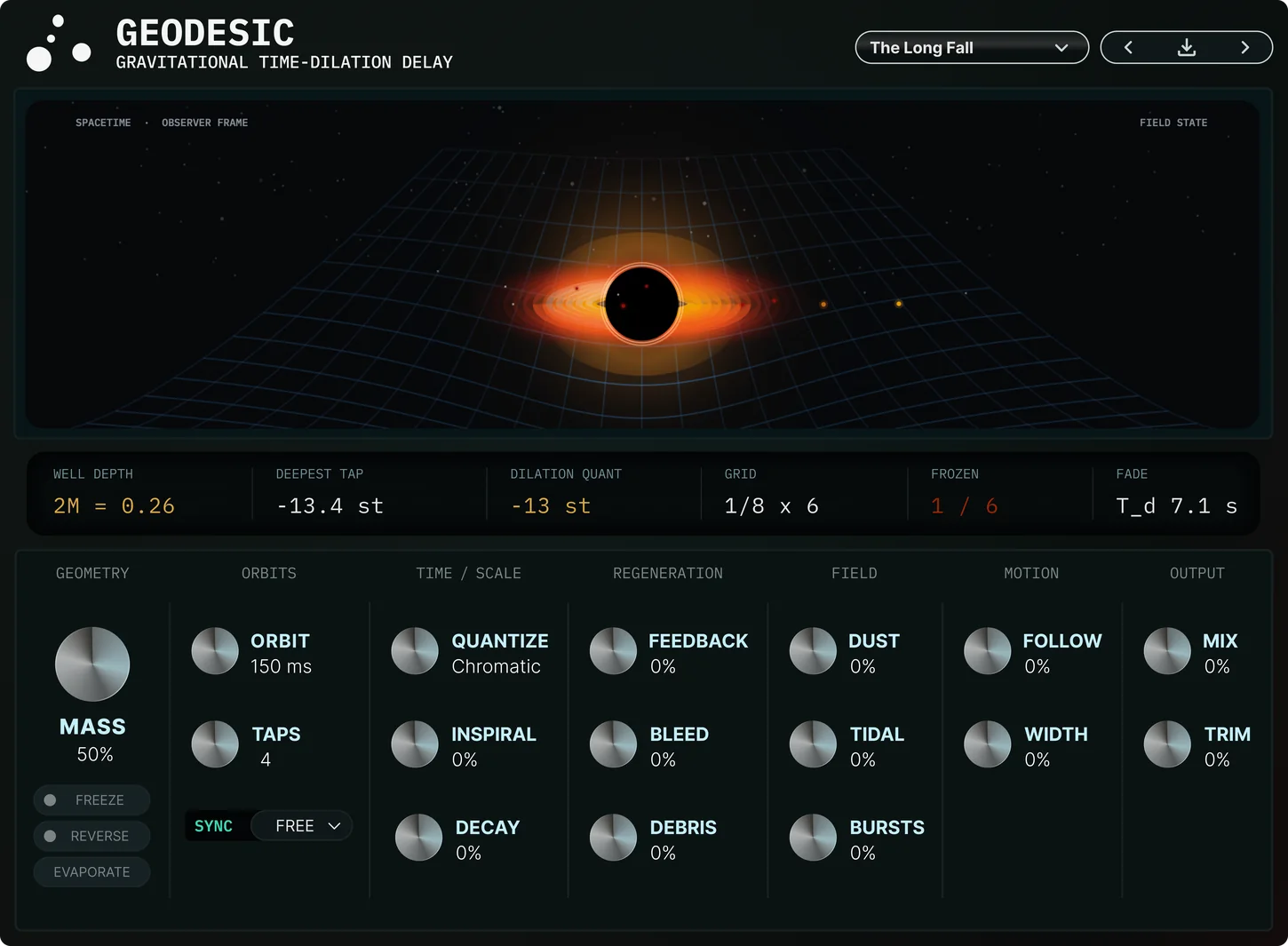 Live spacetime field
Mass · well depth
Orbit · tap radius
Freeze · horizon hold
Live spacetime field
Mass · well depth
Orbit · tap radius
Freeze · horizon hold
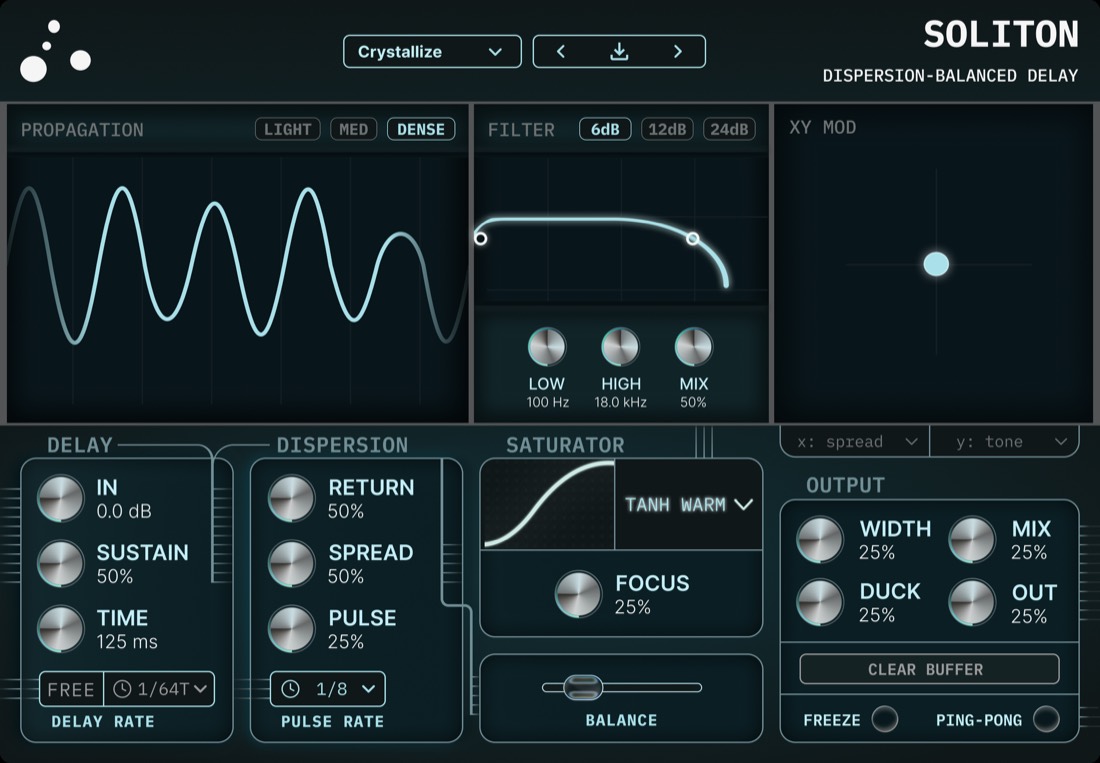
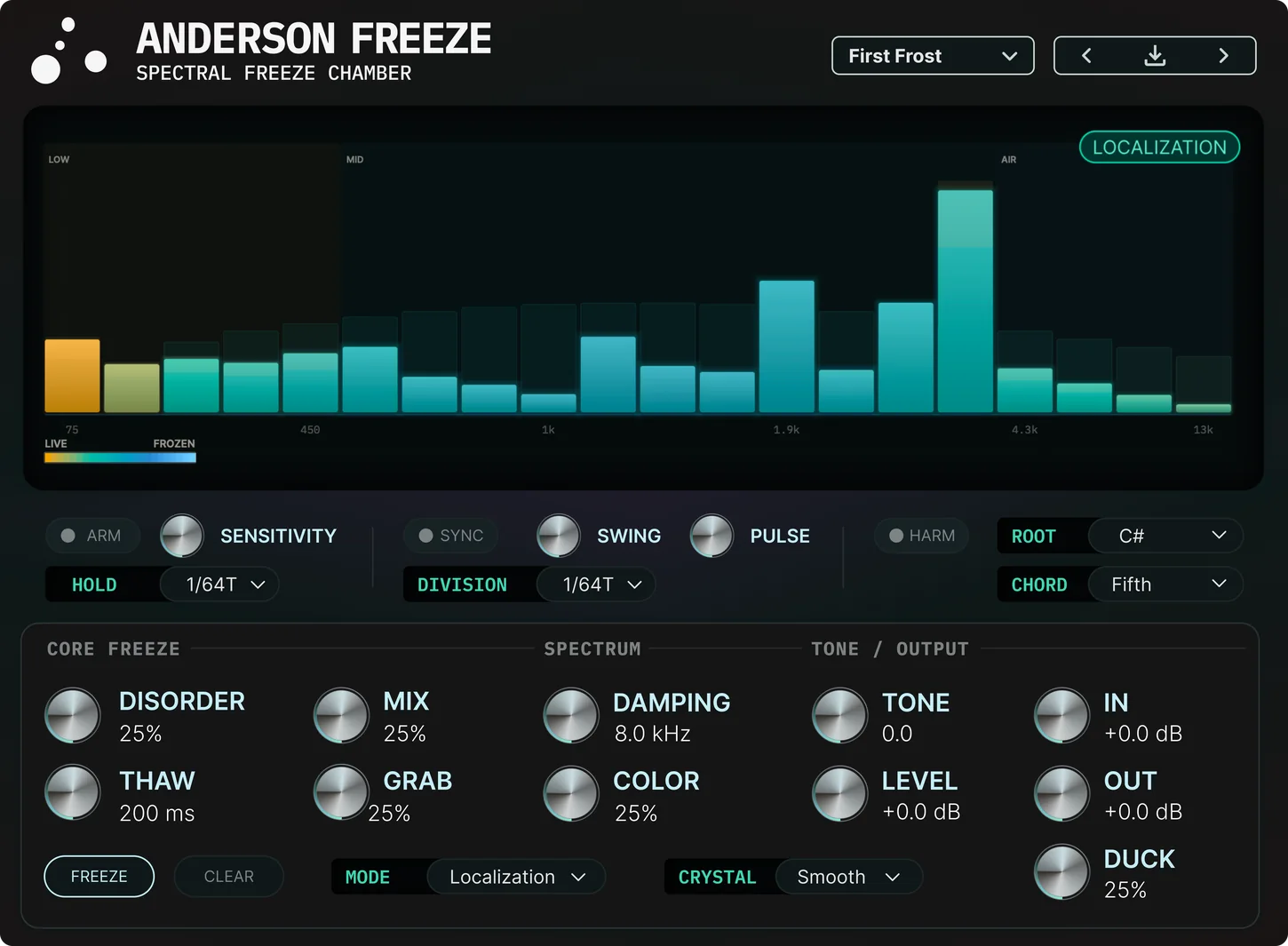
This is the plugin's interface. The mechanism behind it: mass deepens the well, the redshift ratio α falls toward zero, and a tap parks at the horizon. For the full derivation, read the time-dilation note.
Geodesic treats the delay as a radial field, not a row of unrelated taps. Each tap reads its buffer at the local clock ratio α(r) = √(1 − rs/r), so pitch and time stretch are consequences of position in the well. For the deeper technical explanation, read the gravitational time-dilation delay note.
From gentle redshift to a frozen horizon.
Redshift
Taps sit high in the well. Echoes stretch and darken gently, a delay with gravity.
Deepen
Raise mass. Near taps slow harder, pitch bends down, and the field pulls together.
Hold
Below the threshold a tap parks into a held loop. Freeze captures the horizon state.
Evaporate
Effective mass decays. The capture releases, and quiet material can be re-lit.
What Geodesic does differently.
Hear it fall in.
Real capturesEach demo pairs the same source dry and processed. Toggle between takes to hear mass deepen the well and redshift the tail.
Dry analog line.
Dry chord pad.
Dry drum loop.
Dry breakbeat.
Dry arpeggio.
Dry saw lead.
Dry pluck.